Extreme heatwave, an ex advisor to the prime minister & other art shenanigans
A walk through one Paris evening, a 25-year-old painter and a room full of people deciding what counts as good.
By Anas Ben Mejdoub
Werber’s cathedral of strings, Auster’s blue notebook, Tesson’s cabin on the Baikal. On the books that put the writing desk inside the frame, and on what it would take to sit down at one.
By Malak Yacoubi
Casablanca · 14 August 2026
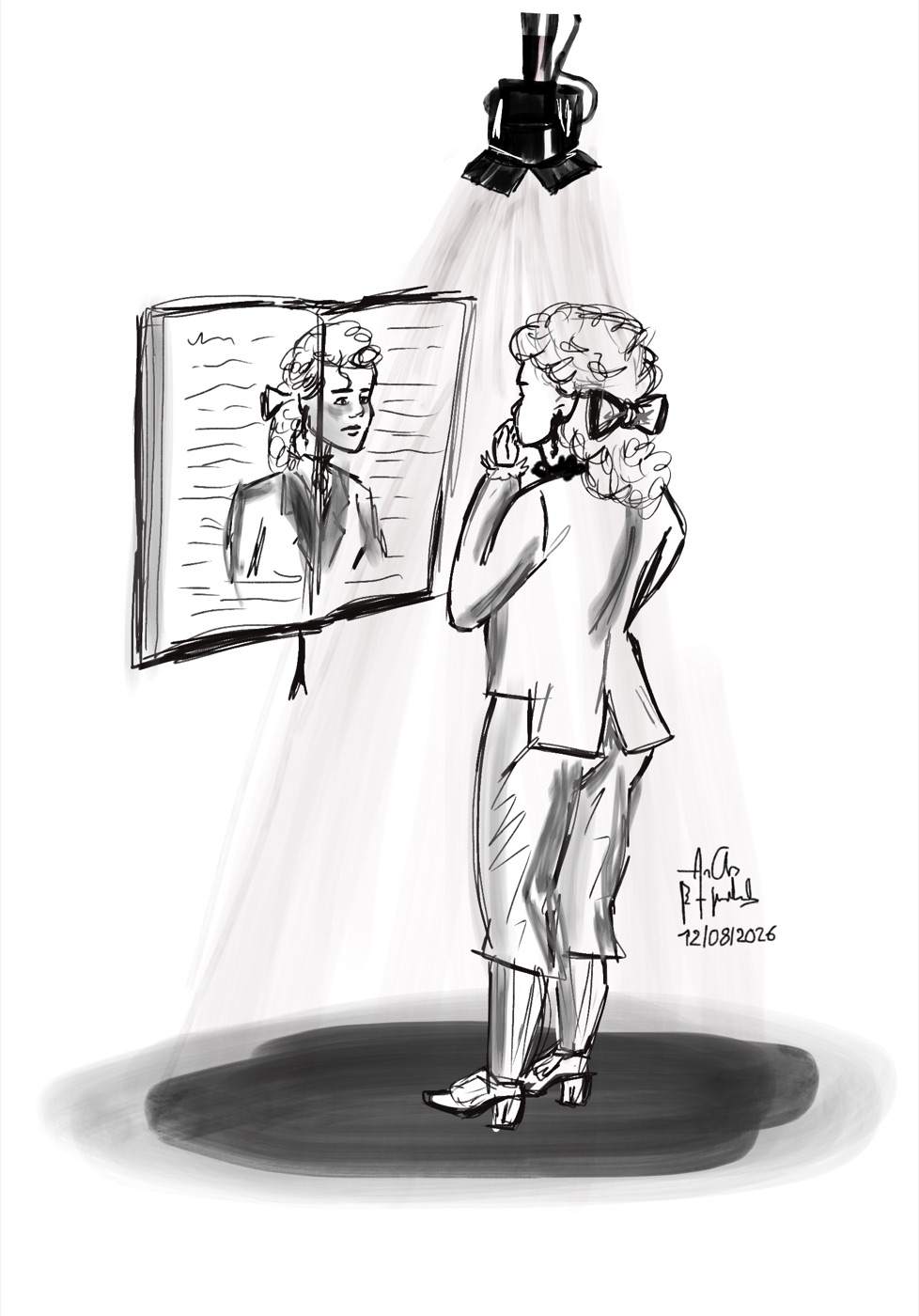
Drawing by Anas Ben Mejdoub, 12 August 2026.
I have always been fascinated with books staging writers. Nietzsche said that the experience of beauty in art is not only the result of a spectator’s contemplation; it is an echo of the creator’s experience, an identification with the act of production itself. The emotions a work of art conveys translate those of its creator. Hence my fascination with the intensity that emerges when a virtuoso writer writes about writing itself…
Bernard Werber wrote the first such character I read about in Empire of Angels. Igor was the author of a saga where rats were the protagonists, The Rats, and he engineered his story in the form of a cathedral. I loved being able to imagine the gigantic cork board above Igor’s desk, the strings he pulled between pins to form a cathedral that reached to the ceiling… That struck me more than the object of his writing. The character took classes to reach unbelievable typing speed on his keyboard, so that there would be no lag between the speed of his thoughts and that of his writing. And he would spend hours in the zone, writing his masterpiece.
Paul Auster also loved to stage writers in his books. In Oracle Night, Sydney Orr is sucked into the magic of a blue notebook he finds in a stationery store. His life slowly starts to resemble the story he writes on the mysterious notebook, in the comforting atmosphere of his writing cabinet. In City of Glass, a writer is tasked with reporting every minute of their opposite neighbour’s life as a form of torture.
In Rebecca F. Kuang’s caustic novel Yellowface, a mediocre white Midwest-American writer steals the manuscript of her brilliant deceased frenemy of Asian descent. After experiencing success for the first time in her career, the secret is revealed, throwing her into the flames of cancel culture and unleashing the ire of X’s worst haters.
Then, there are writers’ travel logs, or writers staging themselves as they investigate cold cases, that introduce a mirror into storytelling. Almost like the latest iPhone enables you to simultaneously take a selfie and picture what is in front of you in that moment, travel logs and investigative stories give you access to the story and how the writer is simultaneously affected by that story. This shows beautifully in Sylvain Tesson’s The Consolations of the Forest.
Tesson narrates six months of solitude in a cabin by the Baikal lake. From February to July, one day at a time, he writes about the storms, the kilometres travelled on foot or kayak, the hours spent fishing, the countless pasta dishes and vodka bottles emptied… Slowly, as he shifts from material considerations to communion with nature, his writing changes, and he transforms into a poet. The Consolations of the Forest takes us alongside his metamorphosis.
I wonder if this mise en abyme is replicable to other crafts? What about movies on movie makers? It seems to me that the intensity of creation is diluted by the amount of people it takes to create a movie. The romantic image of a lonely artist graced by a godly inspiration is lost, replaced by that of directors being brilliant problem-solvers and exceptional leaders, confronted one day with an actor ghosting the set, the next with a funding cut.
What about visual arts? Painters, photographers, and sculptors work alone, and they do perfectly fit the romantic cliché described above. In that case, I will argue that the closest there is to a character-writer is the self-portrait. Staring into Van Gogh’s eyes in his Self-Portrait with Bandaged Ear is plunging deep into his troubled soul; it is apprehending, in a glimpse, the passion and madness that come with the practice of his art. For the ones who see, the intensity is there entirely, condensed within the small two-dimensional area. But when there is so much to say, so much to show, why stop at a single stare?
In each of the books I mentioned, my favourite parts were when the characters sat down and let themselves get carried away by the flow. Whether nestled in a cosy nook by the fire, typing on the latest MacBook, or handwriting on very specific blue notebooks, hidden within a small cabinet under the stairs, or writing in minuscule prose across chaotic sheets of paper: writing is a levitation, a meditation, a connection to the muse. All the more, what is fascinating is the time the craft requires of you as a writer… Writing calls for undivided attention, and I will spare you the paragraph on the effects of social media and short-form content making this rare, if not impossible, today.
Therefore, my fascination is that of any artist towards their own art and their capacity to create. The awe for creation is particularly tangible in literature, for it is essentialised to a few elements: pen and paper, or a computer and text editing software. Authors have generously opened the door to their writing cabinets. Now the next step for me, I guess, would be to accept the invitation, install a giant corkboard above the desk, and start pulling strings between pins…
A walk through one Paris evening, a 25-year-old painter and a room full of people deciding what counts as good.
By Anas Ben Mejdoub
A meditation on kittens, capitalism and the bluish colour of veins, and what is left when life stops being a list of milestones.
By Ghita Benhayoune
Meet the Church of JADE. She won The X Factor with Little Mix, went solo, and made some of the most technically ambitious pop of the decade. Most people still cannot name a song.
By Rezi Getsadze
We’re at the stage of the future where our species seems to be moving past privacy concern all together for the sake of no longer doing exhausting chores. One company will clean your apartment for free in exchange for the footage. In more than 50 countries, the same trade is now being made by the hour.
By James
Your girlfriend deserves a proposal like Malak Yacoubi’s, and I will personally hunt you down to the ends of Greece if you don’t give her her Mamma Mia moment.
By Rania Kettani
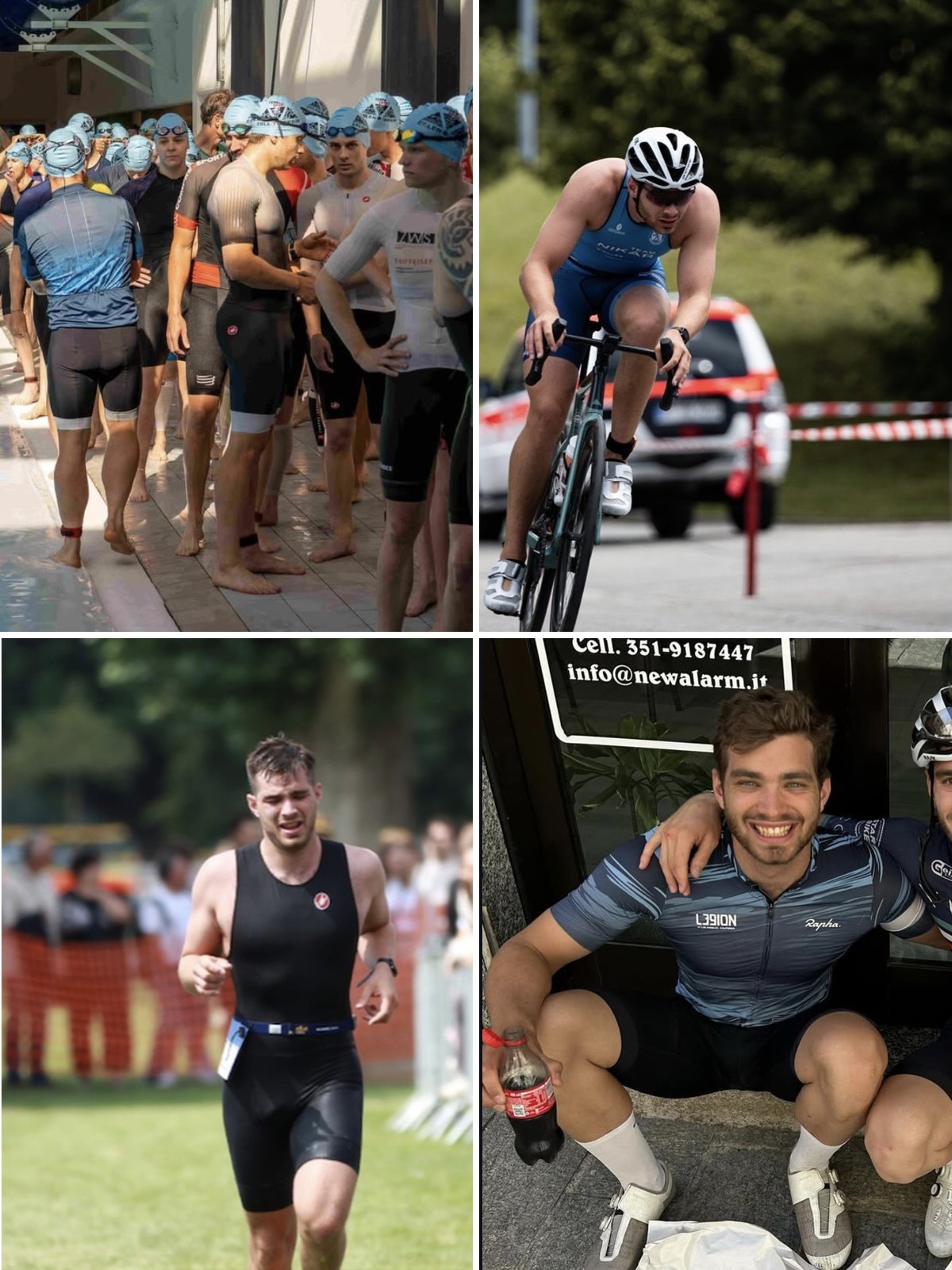
Known on Strava for snatching the podiums on the hardest segments around, Alessandro Motta lined up at the Zurich City Triathlon chasing a real one. A wrong turn cost him a minute; a blown tyre, four kilometres from the bike finish, cost him the rest. Instead of stopping, he ran it barefoot. Interview with Rania Kettani.
By Rania Kettani
A short note when a new piece runs.